The best non-fiction books of 2026, and all time, endorsed by those in the know
From eye-opening autobiographies to political exposés, broaden your horizons with our edit of the best non-fiction books of 2026 and all time, as recommended by other authors and experts.

The best non-fiction books can educate readers on vital subjects, offer fresh new perspectives, or simply give us a valuable, and often entertaining, insight into the lives of others. Here is our edit of the must-read new non-fiction, and the best non-fiction books of all time.
The best new non-fiction books
London Falling
by Patrick Radden Keefe

Why read this: A gripping true story that exposes the hidden forces shaping modern London, this is the latest compelling read from the bestselling author of Empire of Pain and Say Nothing. When teenager Zac Brettler falls to his death from a luxury riverside apartment, his parents uncover a secret double life and are drawn into a world of extreme wealth, deception and danger. Patrick Radden Keefe blends forensic reporting with emotional depth, revealing how a global city’s glittering surface can conceal darker truths about power, identity and inequality. It’s both a heartbreaking family story and a sharp portrait of a city in flux.
If you’re looking for: Investigative journalism, true crime, modern London, extreme wealth, narrative non-fiction.
Great for fans of: Empire of Pain by Patrick Radden Keefe, Butler to the World by Oliver Bullough, A Thread of Violence by Mark O'Connell, Putin's People by Catherine Belton.
What the experts say: ‘Gripping, rigorous and smart . . . breathtaking’ – Jon Ronson, author of The Men Who Stare At Goats and The Psychopath Test. 'More addictive than any box set, London Falling will break your heart, instil you with cold rage, and make you see London in a completely new light' – Sathnam Sanghera, author of Empireland.
The Street Clinic
by Dorcas Gwata

Why read this: This is a powerful, frontline account of London’s youth violence crisis, told through the lives of ten young people. Mental health nurse Dorcas Gwata brings readers directly into her work on the streets, offering rare insight into the realities behind headlines about gangs, knife crime and exploitation. We meet Fuz, who is on trial for aggravated assault. There's Abdul, who’s exploring his sexuality and has been humiliated online. Louise's promising future is compromised by her controlling boyfriend. And there’s Zane, whose parents’ divorce opens up an emotional hole in his life that’s plugged by an ill-chosen new friendship. Compassionate yet unflinching, this book reveals the systemic failures, personal traumas and moments of resilience shaping young lives today.
If you’re looking for: Medical memoir, social justice, youth violence, mental health, NHS frontline stories, contemporary Britain.
Great for fans of: Poverty Safari by Darren McGarvey, With the End in Mind by Kathryn Mannix.
What the experts say: 'A fascinating perspective on why young people join gangs and carry knives. While the rest of us are worrying about it, Dorcas Gwata is doing something.' HHJ Wendy Joseph, bestselling author of Unlawful Killings.
The Emergent Mind
by Gaurav Suri

Why read this: If you want to understand how human intelligence really works – and what that means for the future of AI – this is an essential guide. Drawing on cutting-edge cognitive science, Suri and McClelland explain how complex thought emerges from simple neural processes, linking the human brain to modern artificial intelligence. Clear, engaging and intellectually rich, the book demystifies how we think, decide and feel, while offering a grounded perspective on AI’s rapid evolution. You’ll come away with a deeper understanding of both your own mind and the technologies reshaping the world.
If you’re looking for: Popular science, AI and society, neuroscience, big ideas, psychology of thinking, accessible science writing.
Great for fans of: The Coming Wave by Mustafa Suleyman, Nexus by Yuval Noah Harari, Code Dependent by Madhumita Murgia, Supremacy by Parmy Olson, Humankind by Rutger Bregman.
What the experts say: ‘An indispensable guide to both ourselves and the coming age of AI’ – Mustafa Suleyman, author of The Coming Wave.
The Science of Racism
by Keon West

Why read this: A clear, evidence-based examination of racism that focuses on what the data actually shows. British police are nine times more likely to use their tasers on Black people. An item being advertised on eBay will sell for approximately 20% less if a dark-skinned hand is shown in the photos. And over 50% of us don’t believe racism exists. In a discussion often fueled by anecdote and emotion, Professor Keon West cuts through the divisive rhetoric with decades’ worth of clear, factual, rigorous science to expose what we know about racism, exactly how we know it, and what we can do about it.
If you’re looking for: Data-backed science, the knowledge and confidence to tackle misinformation.
Great for fans of: Black and British by David Olusoga, Brit(ish) by Afua Hirsch, How to Argue With a Racist by Adam Rutherford.
What the experts say: ‘Illuminating, surprising, unnerving, moving’ – Sathnam Sanghera, author of Empireland.
The best non-fiction books about science and technology
This Is for Everyone
by Tim Berners-Lee

Why read this: This rare, first-hand account of the story behind one of the most significant inventions in modern history is both a memoir and a manifesto from the man who invented the World Wide Web. Tim Berners-Lee traces the web’s origins from a simple idea to a global force that has transformed how we live and think. But this isn’t just history – it’s a clear-eyed exploration of how today’s digital landscape affects democracy, creativity and truth, and what must happen next. Insightful, humane and quietly hopeful, it offers a vital perspective on the technology we often take for granted.
If you’re looking for: The history of the internet, technology and society, digital ethics, innovation stories, future of AI, memoir.
Great for fans of: Yuval Noah Harari
What the experts say: 'This Is for Everyone is more than just an autobiography. This book is an insightful recounting of the development of the World Wide Web and a profound declaration on how humanity should remain at the centre of technology as we move forwards in the twenty-first century.' – Al Gore, former US vice president.
Smartphone Nation
by Kaitlyn Regehr

Why read this: If you’re concerned about how smartphones are shaping behaviour – especially for children – this is a clear, practical guide to regaining control. Dr Kaitlyn Regehr, a leading expert in digital literacy, unpacks the hidden forces behind our feeds, from algorithms to harmful content, and explains their real-world impact. Crucially, she moves beyond alarm to action, offering grounded, usable advice on navigating conversations around screen time, online safety and mental wellbeing. Timely and empowering, this is essential reading for anyone who wants to build healthier digital habits – for themselves and the next generation.
If you’re looking for: Digital wellbeing, parenting in the digital age, social media literacy, screen time management, online safety, practical self-help.
Great for fans of: Jonathan Haidt’s The Anxious Generation, Ultra-Processed People by Chris van Tulleken.
What the experts say: ‘A candid, rigorous, and witty read on how to stop digital devices from wreaking havoc on our lives’ – Adam Grant, author of Think Again. ‘Equips us with the practical tools needed to build a healthier, happier future’ – Daisy Greenwell, co-founder of Smartphone-Free Childhood
The Decline and Fall of the Human Empire
by Henry Gee

Why read this: For those drawn to big-picture science that reshapes how we see humanity, this is a provocative and surprisingly entertaining deep dive into our past – and possible extinction. Henry Gee traces our journey from fragile early humans to planetary dominance, before turning to the uncomfortable question: how long can it last? Blending cutting-edge research with wit and clarity, he explores the forces – from climate change to declining fertility – that may already be steering us towards decline. It’s a bold, unsettling and ultimately thought-provoking look at our species, and what it might take to endure.
If you’re looking for: Big history, human evolution, climate and population science, speculative science grounded in research, accessible popular science.
Great for fans of: Steve Brusatte's The Rise and Fall of the Dinosaurs, David Graeber's The Dawn of Everything.
What the experts say: ‘Like Jared Diamond meets Arthur C. Clarke with a dash of Douglas Adams’ – Philip Ball, author of How Life Works.
Code Dependent
by Madhumita Murgia

Why read this: If you want to understand how artificial intelligence is reshaping everyday life, Code Dependent, shortlisted for the Women's Prize for Non-Fiction 2024, offers a powerful, human-centred perspective. Drawing on global reporting, Madhumita Murgia reveals how AI systems are quietly influencing decisions about work, healthcare, policing and more – often with profound consequences. Rather than abstract theory, this is a deeply reported exploration of real lives altered by opaque technologies which challenges the idea that AI is neutral, and asks what we risk losing if we don’t take back control. A vital, eye-opening read for making sense of the AI age.
If you’re looking for: Artificial intelligence and society, tech ethics, digital power and inequality, investigative journalism.
Great for fans of: No Logo by Naomi Klein, Mo Gawdat, Patrick Radden Keefe, Hannah Fry, Caroline Criado Perez and Jon Ronson.
What the experts say: 'The intimate investigation of AI that we’ve been waiting for, and it arrives not a moment too soon' – Shoshana Zuboff, author of The Age of Surveillance Capitalism.
Seven and a Half Lessons About the Brain
by Lisa Feldman Barrett
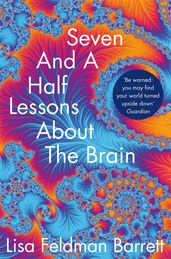
Why read this: A smart, concise introduction to how your brain really works, this book distils cutting-edge neuroscience into seven short, illuminating lessons. Lisa Feldman Barrett challenges familiar myths – from the so-called ‘lizard brain’ to the idea that emotions and logic are in constant conflict – and replaces them with a more surprising, evidence-based view of the mind. Blending clarity with wit, she shows how brains evolved, how they construct our reality, and why understanding them can change how you think about yourself. Sure to intrigue casual readers and scientific veterans alike, the book is full of surprises, humour and revelations about human nature.
If you’re looking for: Neuroscience made accessible, brain myths debunked, human behaviour, consciousness and perception, bite-sized science, psychology and emotion.
Great for fans of: Seven Brief Lessons on Physics by Carlo Rovelli, Astrophysics for People in a Hurry by Neil deGrasse Tyson.
What the experts say: 'Beautiful writing and sublime insights that will blow your mind like a string of firecrackers. If you want a rundown of the brain and its magic, start here' – David Eagleman, New York Times bestselling author of Incognito.
The best autobiographies, biographies and memoirs
Simply More
by Cynthia Erivo

Why read this: Part memoir, part motivational guide, Simply More is a candid and uplifting reflection on growth, ambition and self-belief from award-winning performer Cynthia Erivo. Through a series of personal vignettes, she charts her journey from uncertainty to global stages, revealing the discipline, resilience and vulnerability behind success. More than a celebrity story, this is a thoughtful exploration of what it means to embrace who you are – and to push beyond what others expect of you. Honest and encouraging, it offers practical wisdom for anyone seeking balance, purpose and the confidence to aim higher.
If you’re looking for: Personal growth, creative careers, confidence and resilience, memoir with practical advice, wellbeing and balance, finding purpose.
Great for fans of: Misfits: A Personal Manifesto by Michaela Coel, MILF by Paloma Faith.
Sociopath
by Patric Gagne

Why read this: This is not your typical memoir. For as long as she can remember, Patric Gagne knew that she wasn’t like other people. Unbothered by how her actions affected those around her, by the time she reached her teenage years, her textbook childhood 'bad behaviour' had escalated into petty theft, stalking and worse. In Sociopath, her searingly honest new memoir, Gange explores what it means to be a sociopath, shares her own story of redemption and asks: is there a way for sociopaths to successfully integrate into society?
If you’re looking for: Psychological memoir, true stories of extreme behaviour, mental health and diagnosis, unconventional life stories.
Great for fans of: Jon Ronson’s The Psychopath Test, Jennette McCurdy’s I’m Glad My Mom Died.
What Have I Done?
by Ben Elton

Why read this: A lively, no-holds-barred memoir from one of Britain’s most influential comic voices, this is as entertaining as you’d expect – and more revealing than you might anticipate. Ben Elton takes readers behind the scenes of landmark shows like Blackadder and The Young Ones, while reflecting on the creative risks, friendships and controversies that shaped his career. Packed with sharp humour and candid insight, it’s also a portrait of how comedy evolved over decades of cultural change. A must-read if you want to understand what makes great comedy – and the people behind it. Plus, of course, a ‘little bit of politics’.
If you’re looking for: Comedy history, behind-the-scenes, creative careers, British culture, humorous memoir, showbusiness insights.
Great for fans of: Berserker! by Adrian Edmondson, More Fool Me by Stephen Fry, British comedy, The Young Ones, Blackadder, Upstart Crow.
What the experts say: ‘Funny and fascinating . . . the closest you’ll get to understanding where great comedy comes from’ – David Mitchell.
Wilderness Mum
by Kate Barron

Why read this: This is an inspiring memoir that redefines both motherhood and adventure, Wilderness Mum tells the remarkable true story of choosing an unconventional path. Kate Barron swaps a traditional life for years spent walking the UK coastline, navigating love, survival and eventually pregnancy – all while living outdoors. Honest and uplifting, it explores what happens when you refuse to choose between family and freedom. With vivid storytelling and hard-earned insight, this is a powerful reminder that life doesn’t have to follow a fixed script.
If you’re looking for: Adventure memoir, motherhood and identity, nature writing, resilience and survival, alternative lifestyles, inspiring true stories.
Great for fans of: Finding Hildasay by Christian Lewis, The Yorkshire Shepherdess by Amanda Owen.
What the experts say: ‘A truly inspiring story of courage, resilience and the call of the wild’ – Tim Peake.
Always Home, Always Homesick
by Hannah Kent

Why read this: In an exquisite love letter to Iceland, Hannah Kent reflects on her life-changing experience as a seventeen-year-old exchange student from Australia, and the creative process behind her celebrated novel Burial Rites. She explores how landscape, isolation and memory shape both identity and art. Lyrical yet grounded, it offers insight into the creative process as well as the pull of a place that feels like home – even from afar. Quietly powerful, it’s a thoughtful read for anyone drawn to travel, writing or the idea of finding where you belong.
If you’re looking for: Travel memoir, creative inspiration, sense of place, literary reflection, Iceland and nature writing, personal transformation.
Great for fans of: Burial Rites by Hannah Kent, Names for the Sea by Sarah Moss.
The best true stories and shocking exposés
Careless People
by Sarah Wynn-Williams

Why read this: Shocking and darkly funny, Careless People gives you a front-row seat to the decisions that are shaping our world and the people who make them. Welcome to Facebook. From wild schemes cooked up on private jets to risking prison abroad, Careless People exposes both the personal and political fallout when boundless power and a rotten culture take hold. In a gripping and often absurd narrative, former Director of Global Public Policy Sarah Wynn-Williams rubs shoulders with Mark Zuckerberg, Sheryl Sandberg and world leaders, revealing what really goes on among the global elite – and the consequences this has for all of us.
If you’re looking for: Big Tech exposé, corporate memoir, social media impact, whistleblowing, narrative non-fiction.
What the experts say: ‘Amazing: of all the books in all the world Mr Free Speech Zuckerberg wants to ban, it’s the one about him’ – Marina Hyde.
The Curious Case of Mike Lynch
by Katie Prescott

Why read this: Award-winning journalist Katie Prescott explores the life, and mysterious death, of Mike Lynch. Lynch became one of the UK’s richest men after selling his software company Autonomy to Hewlett-Packard for £11billion in 2011 – a sale which led to one of the biggest fraud cases in Silicon Valley history. After battling in courtrooms for over a decade, and eventually being exonerated, Lynch (and six others, including his daughter) died when his mega yacht sunk off the coast of Sicily. Just hours earlier, his co-defendant has been killed in a car accident. Prescott pieces together the rise and fall of a man whose story proves that in the world of high finance, nothing is ever quite as it seems.
If you’re looking for: Tech industry biography, investigative journalism, corporate intrigue, British business, narrative non-fiction.
Great for fans of: Michael Lewis, Bad Blood by John Carreyrou, Parmy Olson, Succession.
Empire of Pain
by Patrick Radden Keefe
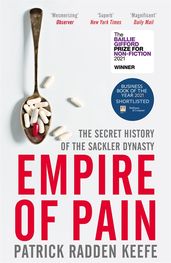
Why read this: A landmark work of investigative journalism, Empire of Pain exposes the dynasty behind one of the most devastating public health crises of our time. From the rural communities ravaged by the impact of opioid addiction to the hallowed halls of some of the world’s most respected cultural and education institutions, the Sackler’s unsavoury legacy in America is undeniable. Patrick Radden Keefe’s Baillie Gifford Prize-winning investigation traces three generations of the Sackler family, from the marketing of Valium to the global devastation wrought by OxyContin. As compelling as a thriller, this book masterfully weaves a story of ambition, greed and secrecy and uncovers how the Sackler family made a fortune from other people’s pain and how they were allowed to get away with it.
If you’re looking for: Corporate accountability, pharmaceutical scandal, investigative journalism, abuse of power, global health crisis, award-winning investigation.
Great for fans of: Painkiller (Netflix), Slow Burn podcast.
What the experts say: 'Put simply, this book will make your blood boil . . . a devastating portrait of a family consumed by greed and unwilling to take the slightest responsibility or show the least sympathy for what it wrought . . . a highly readable and disturbing narrative.' – John Carreyrou, author of Bad Blood.
The best self-help, lifestyle and wellbeing books
No Nonsense Nutrition
by Dominique Ludwig

Why read this: No-Nonsense Nutrition offers a clear, sustainable way to rethink how you eat. Nutritionist Dominique Ludwig distils her evidence-based approach into six simple principles designed to help you feel fuller, more energised and in control of your habits. Alongside practical guidance, you’ll find over 100 satisfying recipes built around balanced nutrition – combining protein, fibre and healthy fats to support long-term health. Straightforward and genuinely usable, this is a refreshing guide for anyone looking to improve their wellbeing without restriction or overwhelm.
If you’re looking for: Healthy eating made simple, weight management, practical meal planning.
Great for fans of: Tim Spector’s Food for Life, Dr Chris Van Tulleken's Ultra Processed People, The Art of Eating Well, Emily English’s So Good.
Tools for Life
by Kirren Schnack

Why read this: Tools for Life shares ten essential therapeutic skills that everyone should know. Drawing on over twenty years of clinical experience, Dr Kirren Schnack covers things everything from attachment styles to boundaries, connecting psychological insight with practical tools you can use every day. Clear, compassionate and grounded in real-world therapy, this is a guide to creating meaningful, long-term change – and living with greater clarity, confidence and self-awareness.
If you’re looking for: Mental health tools, anxiety and emotional wellbeing, attachment theory, boundaries and relationships, practical psychology.
Great for fans of: Dr Julie Smith’s Why Has Nobody Told Me This Before?, How to be Your Own Therapist by Owen O'Kane.
The best finance and business books
The Psychology of Money
by Morgan Housel

Why read this: A modern classic of personal finance, The Psychology of Money shifts the focus from numbers to behaviour. Through a series of engaging, story-driven chapters, Morgan Housel reveals how emotions, habits and personal history shape the way we earn, spend and invest. Rather than offering rigid rules, he provides timeless insights that help you think more clearly about risk, wealth and long-term success. Accessible, thought-provoking and immediately useful, it’s essential reading if you want to make smarter decisions with money.
If you’re looking for: Personal finance, behavioural economics, money mindset, investing basics, practical life lessons, decision-making.
Great for fans of: Atomic Habits by James Clear.
What the experts say: 'Quite simply, it is essential reading for anyone interested in being better with money. Everyone should own a copy' – James Clear, author of Atomic Habits.
Wild Courage
by Jenny Wood

Why read this: Attention those who want to stop playing safe in their careers: Wild Courage offers a bold, practical framework for taking action. Drawing on her experience at Google, Jenny Wood reclaims traits we’re often taught to suppress – from being ‘weird’ to being ‘reckless’ – and shows how they can become powerful tools for success. Packed with actionable advice and real-world insight, this is an energising guide to pushing past fear, embracing discomfort and going after what you really want. Ideal if you’re looking for a career reset with a sharper edge.
If you’re looking for: Career development, confidence at work, leadership skills, personal growth, actionable self-help, overcoming fear.
Great for fans of: Radical Candor by Kim Scott.
What the experts say: ‘Will inspire you to stop seeking permission and to start taking action‘ – Daniel H. Pink, author of Drive.
What’s Up With Women and Money?
by Alison Kosik

Why read this: This is a practical and empowering guide to financial confidence which tackles a gap many women still face: feeling in control of their money. Drawing on her experience as a financial journalist – and her own personal wake-up call – Alison Kosik gives a step-by-step action plan on a variety of money topics. Blending expert advice with real-life stories, the book offers both motivation and a concrete plan for taking charge. Straightforward and encouraging, it’s a valuable read for building financial independence with confidence.
If you’re looking for: Financial empowerment, personal finance, investing and budgeting.
What the experts say: 'This book is not just about teaching you the mechanics of budgeting, saving, and investing. It’s about fundamentally changing the way women think about money and, by extension, about their own power and potential' – Emma Grede, Founder and entrepreneur.
Range
by David Epstein
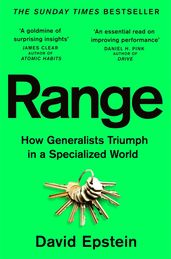
Why read this: A compelling challenge to the idea that success demands early specialisation, Range makes the case for breadth over narrow focus. David Epstein draws on research and real-world examples – from elite athletes to innovators – to show how varied experiences and curiosity often lead to more creative, adaptable thinking. Insightful and highly readable, it reframes career paths, learning and achievement in a way that feels both liberating and practical. Ideal if you’ve ever worried you’re ‘behind’ for not having a single clear track.
If you’re looking for: Career development, learning and performance, creativity and problem-solving, productivity and success.
Great for fans of: Outliers by Malcolm Gladwell, The Power of Habit by Charles Duhigg.
What the experts say: ‘If you're a generalist who has ever felt overshadowed by your specialist colleagues, this book is for you' – Bill Gates, founder of Microsoft.
The best political and historical non-fiction books
If We Tolerate This
by Daniel Trilling

Why read this: This book tackles the rise of far-right rhetoric in mainstream British politics. Daniel Trilling looks at how extremist ideas have moved from the fringes into public discourse – and what that means for democracy today. Concise yet powerful, it equips readers with the context needed to understand a volatile moment in UK politics, while showing what can still be done to change course. Essential reading if you want to make sense of today’s headlines.
If you’re looking for: UK politics, rise of the far right, social and political analysis, investigative journalism, democracy and media.
Great for fans of: Empireland by Sathnam Sanghera, Invisible Women by Caroline Criado Perez.
What the experts say: 'Racism and the rise of the far right in Britain are often discussed but rarely understood. Daniel Trilling is an exception . . . his voice must be heard' – Owen Jones, author of Chavs: The Demonization of the Working Class.
A Different Kind of Power
by Jacinda Ardern

Why read this: An inspiring and deeply personal political memoir, this is Jacinda Ardern’s story of leading with empathy in an often unforgiving world. To describe Jacinda Ardern as trailblazer is no exaggeration. When she became New Zealand's fortieth Prime Minister she was the world's youngest female head of government, and only the second to give birth in office. From her upbringing in small-town New Zealand to becoming one of the world’s most recognisable leaders, she reflects on the challenges of power, crisis and motherhood in the public eye.
If you’re looking for: Leadership and politics, memoir, women in leadership, global affairs.
Great for fans of: Michelle Obama’s Becoming, I Am Malala by Malala Yousafzai.
What the experts say: ‘Insightful and inspiring . . . world leaders have a lot to learn from her timely and important perspective’ – Melinda French Gates.
Frankly
by Nicola Sturgeon
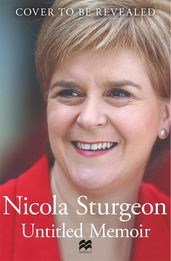
Why read this: This is a candid and compelling political memoir which offers a rare inside view of modern British politics through the eyes of one of its most significant figures. Nicola Sturgeon charts her journey from working-class Ayrshire to the heart of power, reflecting on the pressures of leadership, the realities of public life and the personal cost behind political decisions. Honest, sharp and often revealing, it provides both a portrait of a politician and a wider account of a turbulent political era.
If you’re looking for: UK politics, leadership memoir, Scottish independence, women in politics, contemporary history.
Great for fans of: Politics on the Edge by Rory Stewart, For the Record by David Cameron.
What the experts say: ‘The most insightful and stylishly open memoir by a politician since Dreams From My Father’ – Andrew O’Hagan. ‘Tells her remarkable story with great skill and unflinching honesty’ – Alan Johnson.
Eleanor
by Alice Loxton

Why read this: Blending history with travel and storytelling, Eleanor brings a forgotten queen vividly back to life. Alice Loxton retraces the route of the 200-mile funeral procession held for Eleanor of Castile in 1290, weaving together past and present to reveal a remarkable royal story often overlooked. Rich in detail yet full of charm, it transforms historical research into an engaging journey across England’s landscapes and centuries. Fresh, accessible and quietly illuminating, it’s history that feels alive and deeply human.
If you’re looking for: British history, royal history, narrative history, travel and landscape writing.
Great for fans of: The Rest is History, Lucy Worsley.
What the experts say: ‘Loxton has the novelist’s skill of seeing the world through her characters’ eyes, and the historian’s accuracy of vision’ – Philippa Gregory, author of Normal Women.
Black and British
by David Olusoga
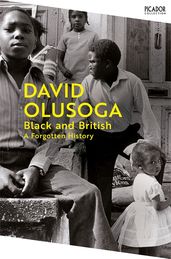
Why read this: In this vital re-examination of a shared history, historian and broadcaster David Olusoga tells the rich and revealing story of the long relationship between the British Isles and the people of Africa and the Caribbean. This edition features a new chapter encompassing the Windrush scandal and the Black Lives Matter protests of 2020, events which put black British history at the centre of urgent national debate. This is vivid confirmation that black history can no longer be kept separate and marginalised. It is woven into the cultural and economic histories of the nation and it belongs to us all.
If you’re looking for: British history, race and identity, social history, cultural analysis, overlooked narratives.
What the experts say: 'You could not ask for a more judicious, comprehensive and highly readable survey of a part of British history that has been so long overlooked or denied.' – Adam Hochschild.
Elizabeth II
by Robert Hardman

Why read this: An authoritative and intimate portrait of one of the most enduring figures in modern history, this biography draws on unparalleled access to reveal the woman behind the crown. Robert Hardman explores Queen Elizabeth II’s life across decades of change, from private family moments to global diplomacy, offering fresh insight into her character, resilience and sense of duty. Rich in detail and storytelling, it’s a compelling account of a monarch who shaped – and steadied – an era.
If you’re looking for: Royal biography, British history, modern monarchy, political and cultural history.
Great for fans of: Queen of Our Times and Charles III by Robert Hardman.
What the experts say: 'If you read one biography on Elizabeth II, this is the one . . . magnificent’ – Simon Sebag Montefiore, author of The World: A Family History of Humanity.
The best non-fiction books about the natural world and environment
Frostlines
by Neil Shea
Why read this: A beautifully written exploration of a region in rapid transformation, Frostlines blends nature writing, travel and science to reveal the Arctic in all its complexity. Neil Shea moves from wolves and caribou to Indigenous communities and geopolitical tension, showing how climate change is reshaping the Arctic into not one new region but many. Expansive yet intimate, it captures both the grandeur of the landscape and the human and animal lives bound up within it.
If you’re looking for: Nature writing, climate change, Arctic exploration, science and travel writing, wildlife, environmental politics.
Great for fans of: National Geographic, Underland by Robert McFarlane, Islands of Abandonment by Cal Flyn.
What the experts say: 'This stunning book – part travelogue, part history, part popular science – will give you a new appreciation for a place, and its people, and how they together are confronting the upheaval of the modern world.' Steve Brusatte, author of The Rise and Fall of the Dinosaurs.
The Return of the Oystercatcher
by Scott Weidensaul

Why read this: At a time when so much nature writing focuses on loss, this is a refreshing and deeply needed story of recovery. Scott Weidensaul travels across continents to uncover the people and projects helping bird populations rebound, showing how conservation can succeed when science, commitment and hope come together. Rich in detail and driven by real-world examples, it offers a powerful reminder that restoration is possible.
If you’re looking for: Birds and conservation, hopeful environmental writing, wildlife recovery, nature and science, global field reporting.
Great for fans of: Isabella Tree’s Wilding, Guy Shrubsole, Merlin Sheldrake.
What the experts say: ‘A joyful, life-affirming celebration of recovery. We need to hear about these miracles. We need to know we can do it, if we try!' – Isabella Tree, author of Wilding
The best sports books
Games of My Life
by Alex Ferguson

Why read this: More than a football memoir, Games of My Life uses twenty-one defining matches to tell the story of an extraordinary career and a life shaped by discipline, rivalry and resilience. Featuring never-before-seen photographs and memorabilia from his private archives, Sir Alex Ferguson reflects on the moments that forged him. Taking us from his early days in Govan to the heights of Manchester United, the book offers unique insight into leadership, teamwork and the pressures of elite sport.
If you’re looking for: Sports memoir, football history, iconic matches, Manchester United, the Premier League.
Great for fans of: My Autobiography by Alex Ferguson, Gary Neville’s The People’s Game.
Find Your Pace
by Emma Kirk-Odunubi

Why read this: Warm, practical and deeply encouraging, Find Your Pace is part running guide, part memoir about finding your way back to yourself. Emma Kirk-Odunubi combines expert coaching with personal experience to show how running can support not just physical fitness, but grief, confidence and identity too. Whether you’re just starting out or looking to improve, she offers realistic advice and training plans without the usual pressure around pace or performance. Inclusive and motivating, this is a book that makes running feel possible, purposeful and genuinely joyful.
If you’re looking for: Running for beginners, fitness and wellbeing, practical training advice, movement and mental health, grief and resilience, inclusive sport
Great for fans of: Jog On by Bella Mackie, Running Like a Girl by Alexandra Heminsley.
What the experts say: ‘A must-read for amateur and experienced runners alike’ – Candice Brathwaite
‘Supportive and genuinely realistic’ – Dr Hazel Wallace
Beyond the Line
by Ben Youngs

Why read this: An honest and moving memoir from one of English rugby’s most accomplished players, Beyond the Line looks past the trophies to the person behind the career. Ben Youngs writes with candour about sporting success, grief, burnout and the complicated role rugby has played in his life. Alongside the highs of elite competition, he explores the losses and struggles that shaped him off the pitch, making this more than a sports memoir – it’s a story about identity, healing and endurance. A compelling read for rugby fans and memoir readers alike.
If you’re looking for: Sporting memoir, rugby union, life behind elite competition.
Great for fans of: Jonny by Jonny Wilkinson, Loose Head by Joe Marler, The Hurt by Dylan Hartley.
The best non-fiction books about arts and entertainment
Artists, Siblings, Visionaries
by Judith Mackrell

Why read this: Artists, Siblings, Visionaries, shortlisted for the 2026 Women's Prize for Non-fiction, is a richly textured double biography which brings the lives of Gwen and Augustus John into sharp, compelling focus. Judith Mackrell explores their contrasting temperaments, tangled relationships and extraordinary artistic gifts, revealing how both siblings challenged the expectations of their time. What emerges is not just a portrait of two remarkable creatives, but a vivid account of ambition, family, love and recognition. Insightful and atmospheric, it’s ideal for readers who enjoy art history with strong narrative drive and emotional depth.
If you’re looking for: Art history, biography, creative lives, family dynamics, early twentieth-century culture, women artists.
Great for fans of: The Unfinished Palazzo by Judith Mackrell, Square Haunting by Francesca Wade, The Story of Art Without Men by Katy Hessel.
What the experts say: 'This dream of a book lures us back to that most fascinating world, that of Gwen and Augustus John.' – Louisa Young author of Twelve Months and a Day.
A Sound So Very Loud
by Ted Kessler

Why read this: A love letter to Oasis and a deeply researched account of their music, this is the kind of book that goes beyond myth and nostalgia to ask why the songs still matter. Ted Kessler and Hamish MacBain draw on decades of access to Liam and Noel Gallagher to tell the story of the band through the tracks themselves, from era-defining singles to beloved B-sides. Full of wit, detail and sharply observed anecdotes, it captures both the swagger and the substance. Essential for anyone who wants to revisit – or properly understand – Oasis at full volume.
If you’re looking for: Music history, Oasis, Britpop, rock journalism, behind-the-scenes stories.
Great for fans of: Oasis: Supersonic, Any Road Will Get Us There by Noel Gallagher Revolution in the Head by Ian MacDonald.
What the experts say: 'Ted Kessler and Hamish MacBain are fantastic chaps. The Dudley Moore and Peter Cook of music journalism.' – Liam Gallagher.